Electric heating: Instant warmth – complete flexibility
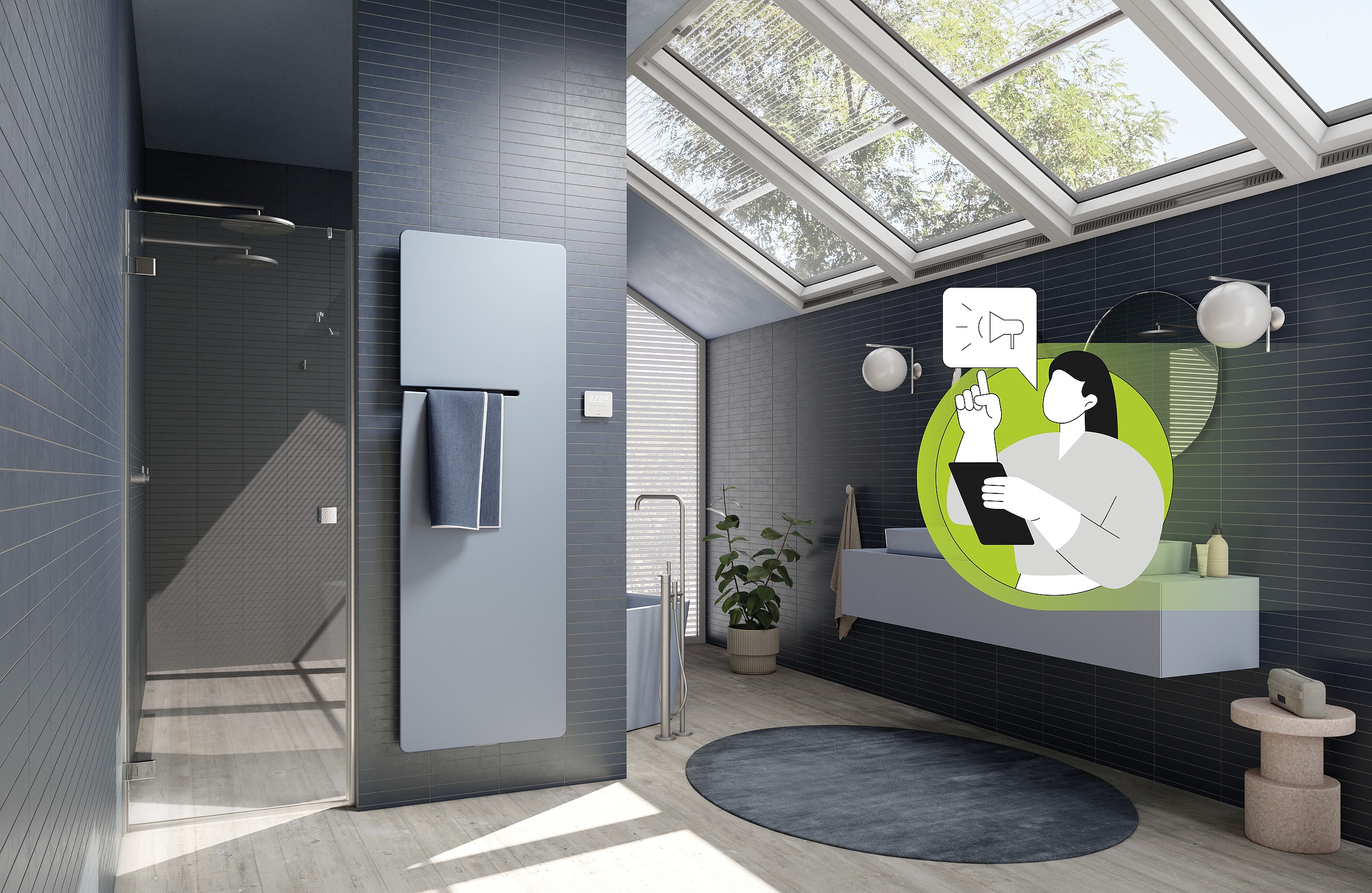
Does it make sense to heat with electricity at all? This is a question worth asking, given the general trend towards rising electricity prices and the wide range of alternative heating options available. However, there are certainly areas of application where electric heating offers clear advantages over other systems – particularly when it comes to providing localised, rapid heat. A wide range of versions is available to suit different needs.
At a glance
- Electric heating: Electric heaters convert electrical energy directly into heat within the appliance – independently of a central heating system.
- Types of electric heating: electric radiators , electric underfloor heating, infrared heaters, fan heaters, storage heaters. Special case: heat pump.
- Key advantages: Rapid heat and simple installation.
- Electric heating and its costs: Inexpensive to buy and perform the installation, but comparatively expensive to run over the long term.
- When is electric heating a good option? Particularly suitable as supplementary heating when extra warmth is needed in specific areas, or in rooms that are rarely used.
Tips for electric heating: Heat efficiently through good insulation, smart controls and targeted use. Combining it with a photovoltaic system reduces electricity costs.
How does electric heating work?

Electric radiators, electric underfloor heating or fan heaters – there are various versions to heat a room using electricity. However, the principle is the same for all these versions: electrical energy is converted into heat. To achieve this, electricity flows through a heating element with electrical resistance, such as a heating wire. The heating element heats up and releases the resulting heat into the surrounding area. Depending on the heating system, the heat is either released directly into the room or first stored temporarily in a heat storage medium.
Direct heating systems release heat directly into the surrounding area and therefore start heating immediately after being switched on.
In storage heating systems, storage media such as ceramic bricks first absorb the heat and then release it into the surrounding area after a delay
Difference: electric and water-based heating
Traditional central heating systems, such as those found in most households, are water-based: gas or oil burners, pellet systems, district heating or heat pump systems heat water. This water is then transported via pipelines to all the radiators or to the underfloor heating system, thereby ensuring a comfortable room temperature.
In contrast, electric heating systems generate heat directly within the appliance itself. A central heating system and pipelines are therefore not required. A simple socket or mains connection is all that is needed for connection, which makes installation particularly straightforward and flexible.
What is additional electric operation?
Many traditional hot water radiators are available with an optional integrated electric heating rod. This allows you to heat using electricity as and when required, independently of the hot water heating system. This is particularly handy on those days in spring or autumn when it’s still a bit nippy, but the central heating has already been switched off or hasn’t been switched on yet. In such cases, the additional electric heating provides the extra warmth you need at just the right moment, with no fuss.
These electric heaters are available
There are various versions of electric heaters, which differ in how they work and the range of applications for which they are used. The best-known versions are:
Electric radiators
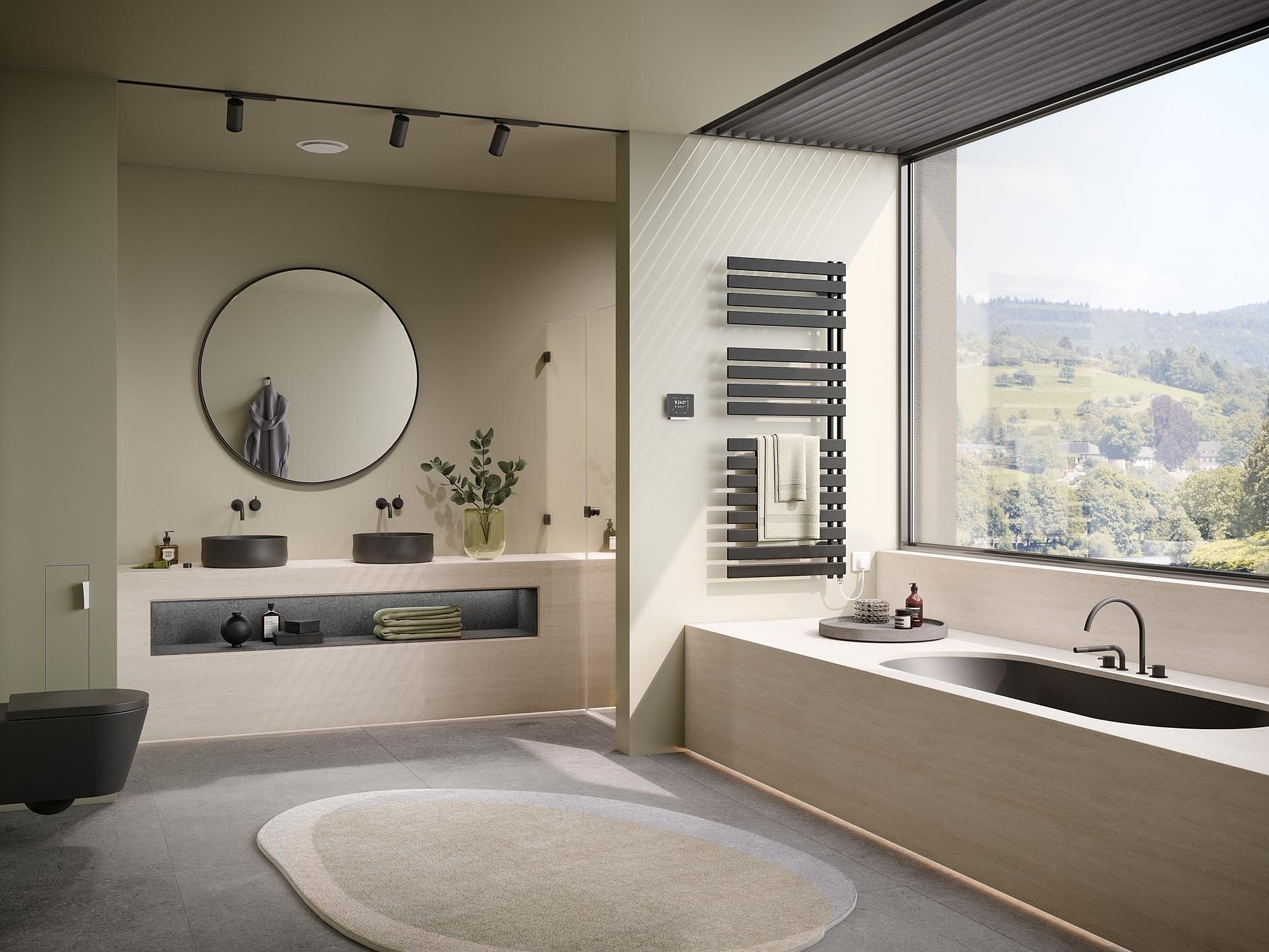
Electric radiators provide targeted, rapid heating and can be used flexibly in a variety of rooms – usually as supplementary heating.
How does an electric radiator work?
Many electric radiators are filled with a heat transfer fluid. This is heated by the built-in heating rod, which then distributes the heat throughout the entire radiator. The air flowing past the radiator’s surface is then primarily heated, thereby warming the whole room. This is known as convection heat.
The main types:
Flat electric radiators have a classic radiator design and are ideal for localised heat demand, for example in hobby rooms, holiday homes or studies.
Electric bathroom radiators are usually vertical models that also serve as towel rails. To this end, transverse pipes or openings are integrated into the design, or special, additional towel rails are available. Electric bathroom radiators are particularly suitable when additional heat is required in the bathroom for short periods at specific times – such as in the morning or evening.
Electric underfloor heating systems
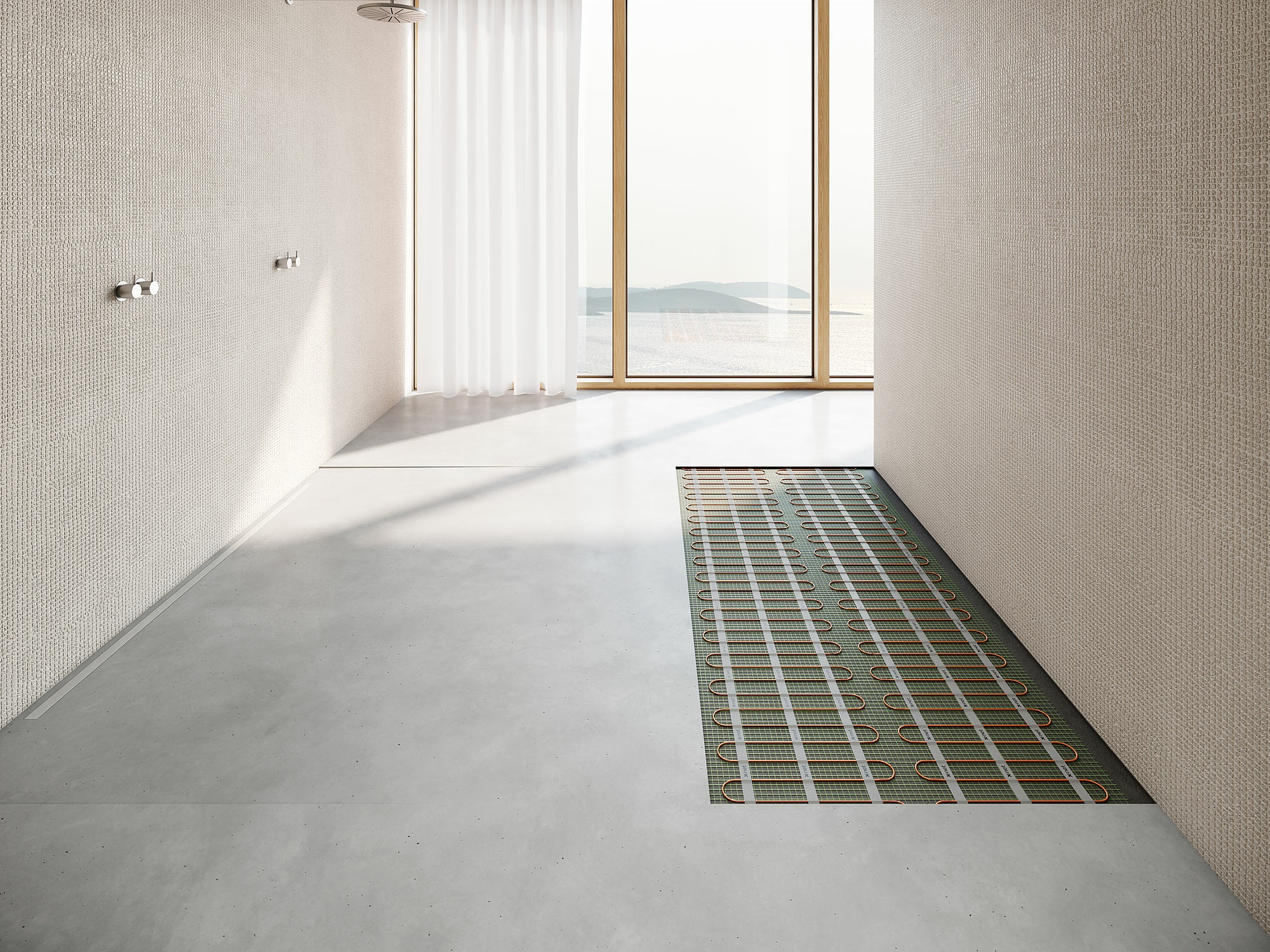
Thanks to the even heat distribution, underfloor heating is generally considered to be very comfortable. The electric version is particularly straightforward to retrofit and brings cosy warmth into rooms without the need for a connection to the central heating system. Retrofitting is often requested, particularly in the bathroom.
How does electric underfloor heating work? Electric underfloor heating systems consist of thin heating mats or heating cables that are laid directly beneath the floor covering. These heating mats are heated by electricity and give off cosy radiant heat over a wide area into the room.
Infrared heaters
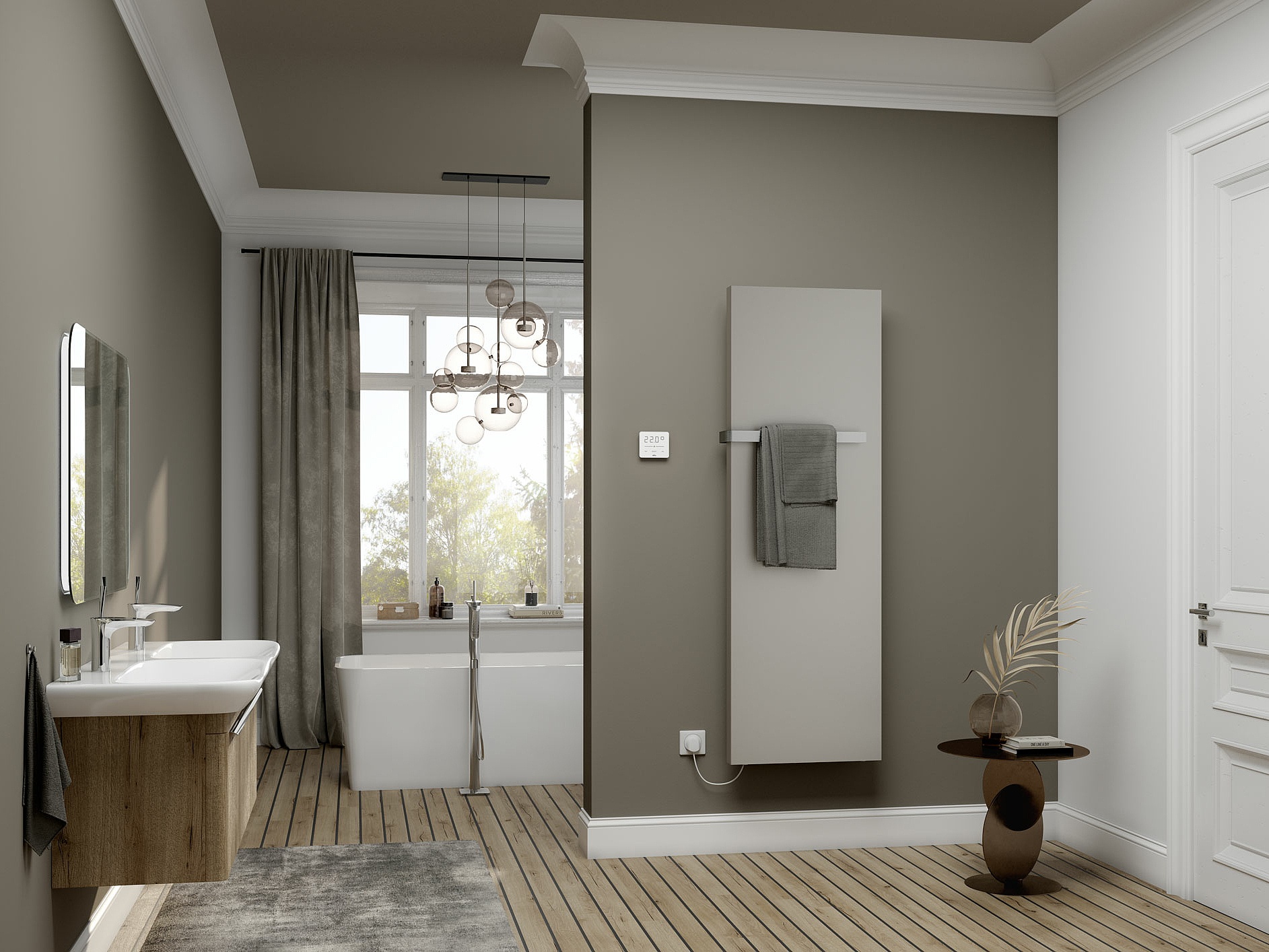
Infrared heaters provide special comfort with their soothing radiant heat. They are usually used as supplementary heating or to heat small rooms quickly.
How do infrared heaters work? Infrared heaters do not heat the room air, but rather the surrounding surfaces and objects. To do this, they are fitted with a heating mat which heats up as electricity passes through it and emits comfortable radiant heat. This heat can be felt directly on the skin – much like the sun’s rays – and is perceived as particularly pleasant. As there is less air circulation, less dust is stirred up – a bonus for allergy sufferers.
Fan heater
Fan heaters give off pleasant warmth as soon as they are switched on. As portable and versatile appliances, they are used, for example, in bathrooms or workshops, but also on building sites to provide temporary heating or additional warmth.
How do fan heaters work? An electric current flows through heating coils inside the appliance, causing them to heat up. A built-in fan draws in room air, directs it through these hot coils and releases the warmed air straight back into the room.
Night-storage heaters
Night storage heaters
Night storage heaters are still commonly found as the sole heating solution, particularly in older buildings, but are now regarded as rather uncommon for economic and environmental reasons.
How does a night storage heater work? Night storage heaters use cheap night-time electricity to generate heat. This heat is stored temporarily in ceramic blocks and released during the day.
Electric heating: heat pumps as a special case
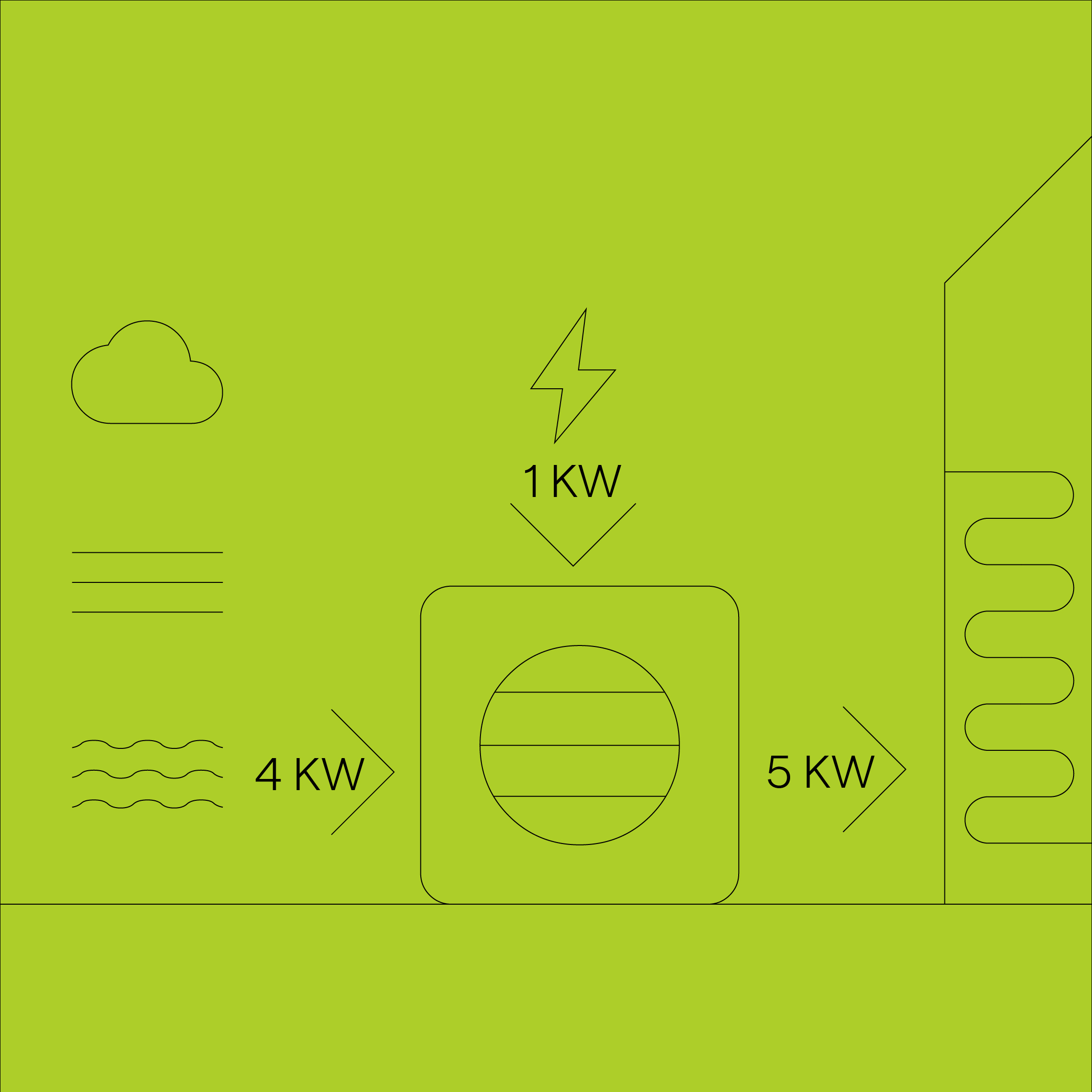
Heat pumps are a special case when it comes to heating with electricity: they do not convert electricity directly into heat. Rather, they use it to extract heat from environmental sources and make this available to a central, water-based heating system. In doing so, they operate extremely efficiently and generate significantly more thermal energy than they consume in electricity.
Following an initial higher capital outlay, heat pumps can therefore be expected to have significantly lower operating costs than other electric heating systems. As such, they are often a particularly efficient solution for space heating and domestic hot water in well-insulated buildings.
What you need to know about heat pumps and what to consider when choosing one
Electric heating – advantages and disadvantages
Advantages:
Easy installation & retrofitting: Electric heating requires no complex pipework or connections – just a socket or mains connection.
Instant heat: Electric direct heating systems provide heat immediately after being switched on, whilst a water-based central heating system reacts somewhat more slowly.
Low purchase and installation costs: Electric heaters can be installed individually, completely independently of a central heating system. Purchase and installation are therefore cost-effective.
Low maintenance: Electric heating requires neither a burner nor a hot-water pipework system. This eliminates the need, for example, for cleaning and maintenance work by a chimney sweep, and hydraulic balancing by a plumber is also unnecessary.
Independence from fossil fuels: Those who heat with electricity do not need fossil fuels such as oil and gas. If electricity is generated from a private photovoltaic system or from renewable energy sources, the CO₂ emissions associated with the heating mode can be further reduced.
Disadvantages:
High operating costs: When used continuously, electric heating is generally more expensive than heating with gas, oil or wood.
Not always suitable as a primary heating system: If the whole house is to be heated with electricity, each room requires its own control system. Furthermore, electric heating solutions can quickly become uneconomical, particularly in poorly insulated buildings or where heat demand is high. For this reason, electric heating systems are often used as supplementary heating.
Dependence on electricity prices: Rising electricity prices have a direct impact on heating costs.
Environmental considerations: The carbon footprint depends heavily on whether green electricity is used for heating.
Electric heating and its costs

Direct heating systems, infrared heaters and electric underfloor heating are often inexpensive to buy. Thanks to their simple installation, the installation costs are usually low as well.
Heat pumps, in particular, can require a higher initial investment – both for the purchase of the units and for the more complex installation.
How much does it cost to heat a home using electricity?
With electric heating systems, running costs depend directly on the price of electricity per kWh. Heating therefore becomes cost-effective when free electricity from your own PV system can be used.
Direct heating systems and night storage heaters incur high electricity costs when operated continuously.
Heat pumps are significantly more efficient and generate considerably more heat from the electricity used than direct electric heating systems. Consequently, operating costs are much lower in this case.
If electric heating systems are used as supplementary heating, e.g. for individual rooms, costs are incurred only when they are in operation.
Does it make sense to heat with electricity at all?
Anyone considering electric heating should bear the following costs in mind: where heat demand is low and for occasional use in individual rooms, electric heating can be a cost-effective and convenient solution – particularly if you have your own PV electricity available. However, apart from heat pumps – which are a special case of electric heating – electric heating systems are generally not suitable for long-term use as the main heating source in large, poorly insulated buildings.
Where is electric heating suitable?
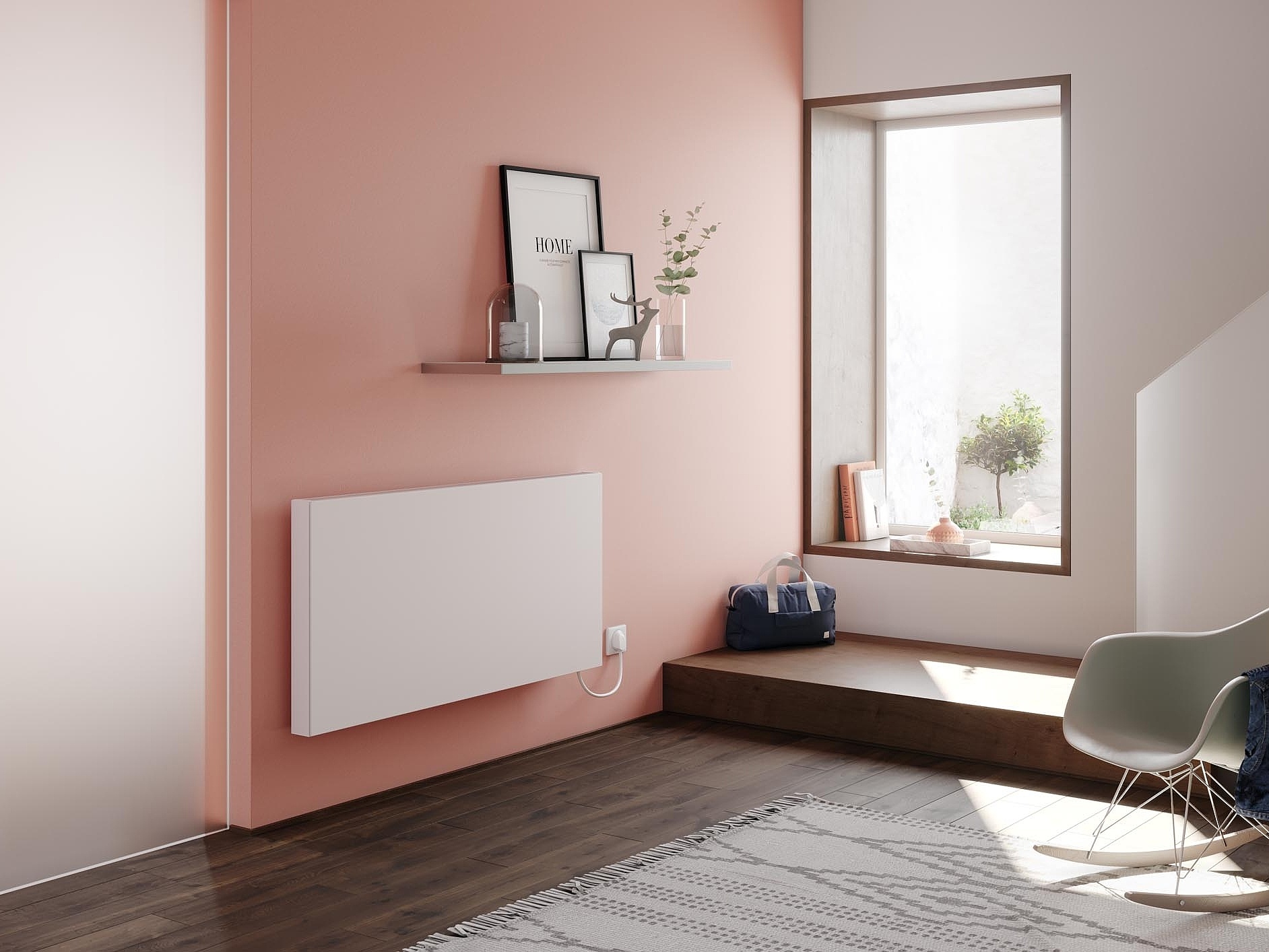
Well-insulated buildings: Low heat loss in energy-efficient new builds or refurbished older properties means that higher electricity prices are less of a problem here.
For additional heat demand in the bathroom: If more heat is needed at short notice or for short periods – for example, for a morning shower – electric radiators or electric underfloor heating quickly provide the desired level of comfort.
Rarely used rooms: Holiday homes, offices, hobby rooms or guest rooms that are only used occasionally can be heated quickly and at short notice using electricity. This means there are no running costs outside of the times when the rooms are in use.
Renovation: Electric heating is a perfect solution for retrofitting, particularly in rooms that do not have a connection to the central heating system.
With your own photovoltaic system: Heating with electricity makes particular sense for households that generate their own electricity using a photovoltaic system and can use this for heating.
Temporary solutions: Portable electric heaters can be used flexibly, for example, in the event of a heating failure, on building sites or at events.
Tip: Electric auxiliary heating for short-term heat demand
Electric radiators can be an ideal complement to underfloor heating, particularly in the bathroom. The underfloor heating ensures a constant, comfortable room temperature. However, if you need it to be a little warmer for a short while – for example, for your morning shower – the electric radiator quickly provides extra warmth.
Particularly convenient: with the right controller / control unit, you can even programme heating times to suit your daily routine. This means you no longer need to get up just before your shower to switch on the electric radiator. The bathroom welcomes you with cosy warmth exactly when you need it – and at the same time, you save energy as the radiator only runs at the times you specify.
Photovoltaics and electric heating: a combination for cost-effective heating
Combining photovoltaics with electric heating can reduce electricity costs, as the solar power generated on-site can be used directly for heating. This solution is particularly attractive in well-insulated buildings or where heat demand is low. If a battery storage system or a smart control system is also used, the proportion of solar power consumed on site can be increased even further.
Heating your home cheaply with electricity: here’s how to do it

Good insulation and residential ventilation with heat recovery prevent heat loss and reduce heat demand.
Do not block radiators with furniture or curtains, so that the heat is distributed as effectively as possible.
Only use appliances for short-term heat demand and switch them on only in rooms that are actually in use and at times when they are needed.
Use smart thermostats or timers to control heating times and temperatures according to your needs.
Use electricity from your own solar panel system in the heating mode to reduce costs and CO₂ emissions.
Choose efficient, modern appliances.
FAQ
Which heating systems use electricity as their energy source?
Electric heating systems primarily include electric radiators, electric underfloor heating, infrared heaters, fan heaters and night storage heaters. These appliances convert electricity into heat, which is then released into the room either immediately or after a delay. Heat pumps are a special case: they also use electricity. However, they use it to extract heat from the environment. This means they can supply more heat energy than they consume in electricity.
What is the difference between direct heating and a heat pump?
Direct electric heating systems use electricity to generate heat directly and release it straight into the room. Heat pumps, on the other hand, use electricity to convert environmental heat from the air, ground or water into heating energy. Consequently, they require only a small amount of electricity for heat generation and are therefore significantly more efficient than direct electric heating systems.
Is electric heating still a viable option?
Electric heaters are now rather uncommon as the sole heating source due to their operating costs. However, they can certainly be a sensible option as supplementary heating for occasional heat demand – for example, in rooms that are rarely used – or as a flexible, easy-to-install retrofit solution for rooms without a central heating connection. In particular, in well-insulated buildings and in combination with a private solar panel system, they can be operated in a cost-effective and resource-efficient manner.
Heat pumps are a special case: they also use electricity; however, the majority of the energy required for heat generation comes from ambient heat. Compared to traditional electric heating systems, they are therefore ideally suited as a sole heating source. In new builds and renovation projects, they are even regarded as a particularly sustainable and efficient heating option.
Lohnt sich eine Stromheizung in Ferienwohnungen oder Nebenräumen?
Ja, gerade in Ferienwohnungen oder Nebenräumen kann eine Stromheizung eine sinnvolle Lösung sein. Sie spendet schnell und punktuell angenehme Wärme, kann einfach, ohne Anschluss an die Zentralheizung installiert werden und ist vor allem für gelegentliches Heizen eine wirtschaftliche Option. Daher eignet sie sich besonders für Räume, die selten genutzt werden, etwa Hobby- und Arbeitsräume oder Gästezimmer.
What is an infrared heater and how does it work?
An infrared heater is an electric heater that warms walls, furniture and people in the room rather than the air itself. To achieve this, a heating mat inside the unit is heated, emitting cosy radiant heat. This is perceived as particularly comfortable – much like the sun’s rays on the skin.