Focus on heat pumps
What you should know
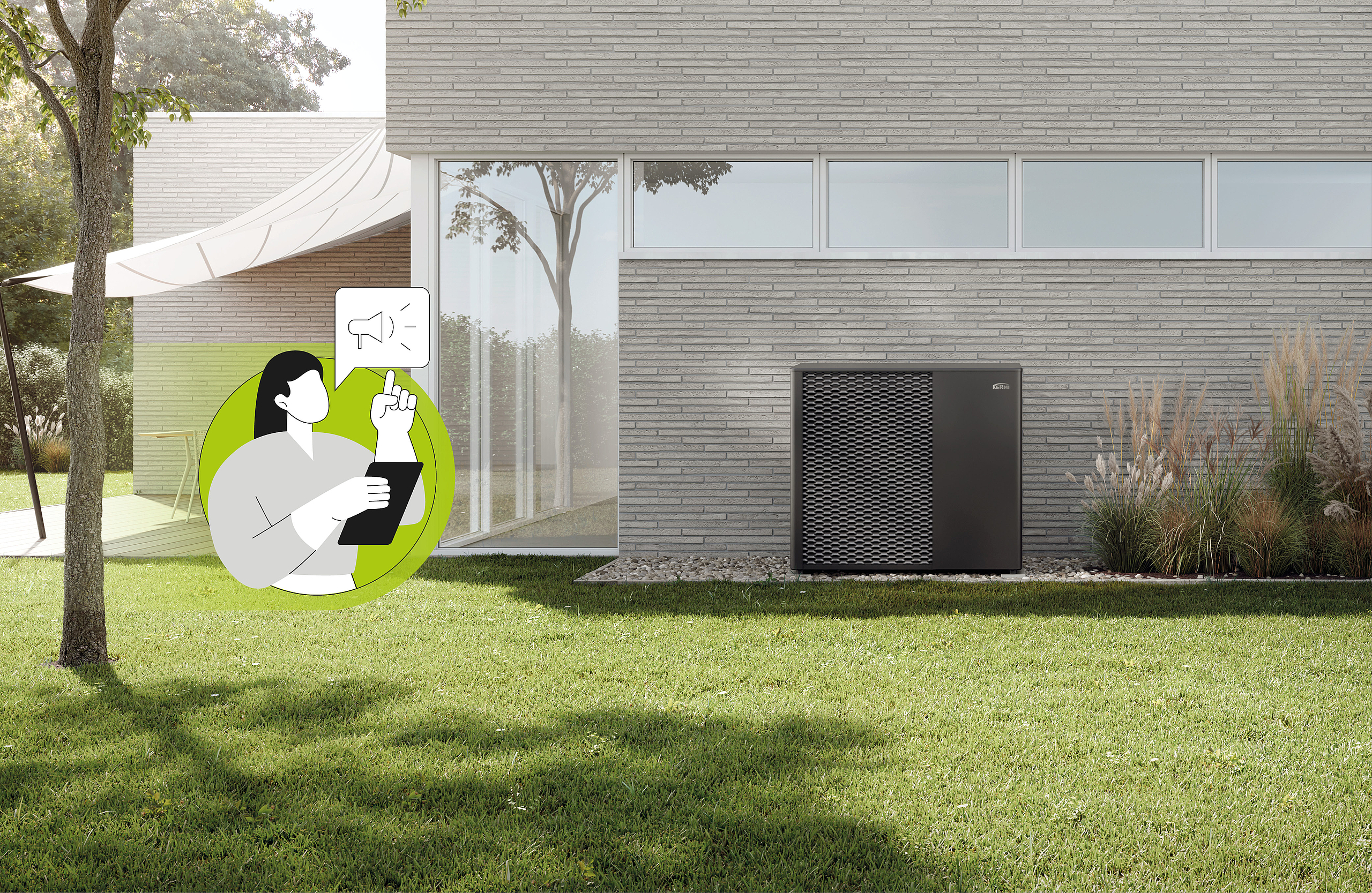
Heat pumps are increasingly establishing themselves as an environmentally friendly heating solution that utilises natural energy sources while efficiently reducing heating costs. Their functionality, advantages and wide range of uses make them a pioneering technology for sustainable and comfortable living. It's worth taking a closer look to understand the technology and find the right heat pump for your home.
At a glance
- Function: Heat from environmental energy is converted into heating energy.
- Advantages of heat pumps: Environmentally friendly, cost-efficient and future-proof
- Types of heat pumps: air-to-water heat pump (flexible and easy to install), water-to-water heat pump (high efficiency, well construction required) and brine / water heat pumps (high efficiency, space-intensive).
- Finding the right heat pump: Requirements for installation and suitable heat pump types for different installation conditions
- Costs & subsidies: Higher purchase costs are made attractive by subsidies; electricity costs for operation depend on efficiency, insulation and heating requirements.
- Maintenance: Heat pumps are low-maintenance, do not require a chimney sweep and can often be serviced remotely.
Function of a heat pump - briefly explained
The way a heat pump works is based on extracting heat for heating and hot water from environmental energy - such as air, earth or water. To do this, the heat pump extracts heat from the environment and utilises it for the heating system. Only a small amount of electrical energy is required for this.
Advantages of a heat pump
The efficient, resource-saving technology of heat pumps is winning over more and more people - and for good reasons. The advantages of a heat pump cover both ecological and economic aspects:
- Environmentally friendly & future-proof: heat pumps use renewable energy and thus make a significant contribution to reducing CO₂ emissions. They also make you independent of fluctuating oil and gas prices.
- Cost-efficient: As there are no costs for fossil fuels, heating costs are noticeably reduced - a real plus for your wallet.
- Versatile: Heat pumps are suitable for use in new buildings as well as for modernising existing heating systems.
- Eligible for subsidies: Subsidy programmes provide financial support for the purchase and installation and make investing in the many benefits of a heat pump even more attractive.
- Comfortable: Heat pumps not only provide pleasant warmth in winter, but can also cool in summer.
- Low maintenance: Heat pumps are durable and require little maintenance, which keeps the effort and follow-up costs low.
- Quiet in operation: Modern heat pumps operate very quietly and do not disturb living comfort.
What types of heat pumps are there?
Heat pumps are available in various versions, which differ primarily in terms of the heat source used. Different systems are used depending on the location, building type and individual requirements:
Air-to-water heat pump
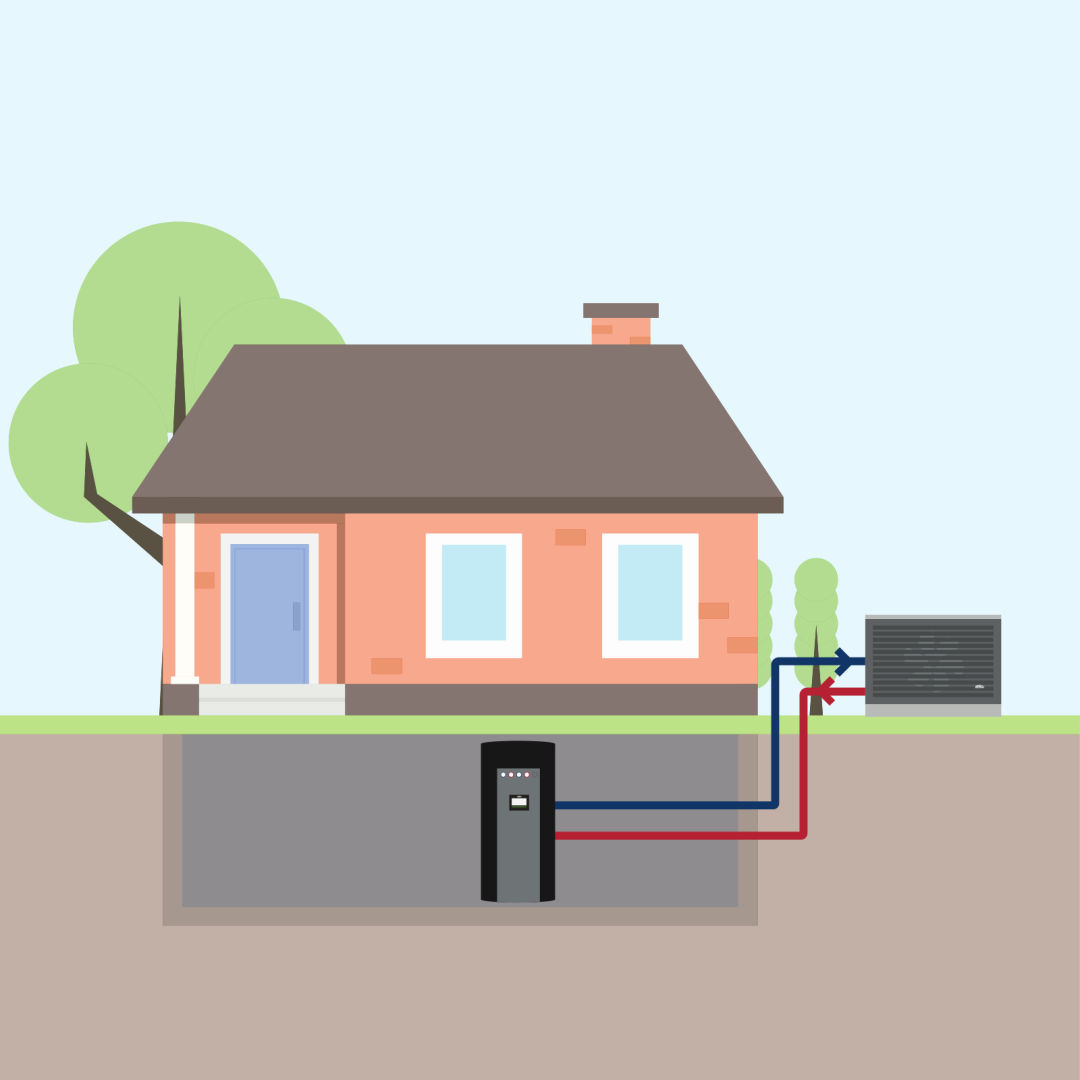
The most commonly installed type of heat pump is the air-to-water heat pump, also known as an air source heat pump. It obtains heat from the energy in the ambient air. As an outdoor heat pump unit, it is installed in front of the house or in the garden.
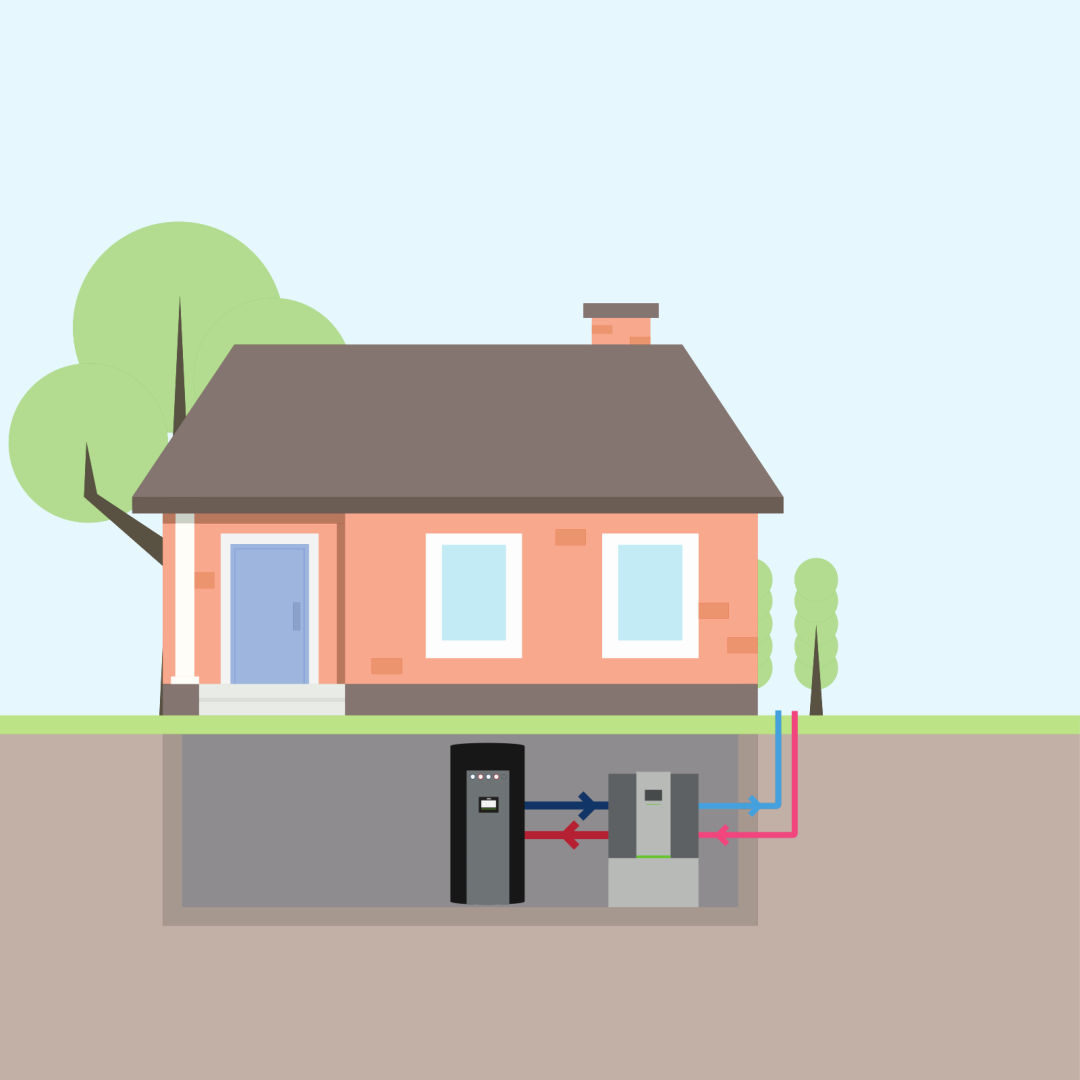
However, there are also models for installation inside the building, for example in the basement or plant room.
Advantages of the air-to-water heat pump:
- Simple, cost-effective and flexible installation - even when retrofitting
- No complex development measures and authorisations required
Water-to-water heat pump
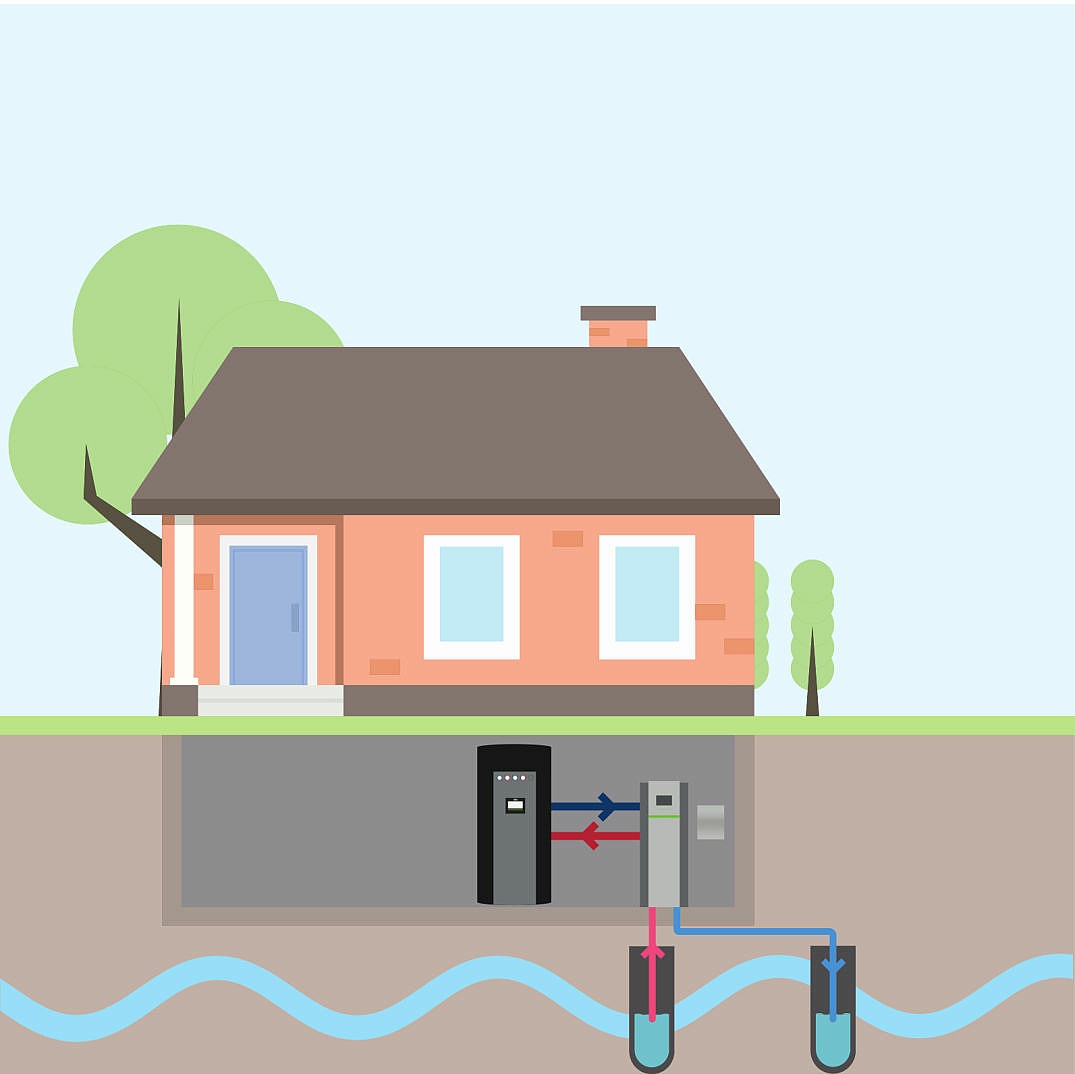
The water-to-water heat pump, also known as a groundwater heat pump, utilises the constant temperature of the groundwater to generate heat. Two wells are required for operation: one pumps the groundwater upwards, the other returns it to the depths after the heat has been extracted.
Advantages of the water-to-water heat pump:
- High efficiency
- Particularly efficient and economical to operate
Brine / water heat pumps
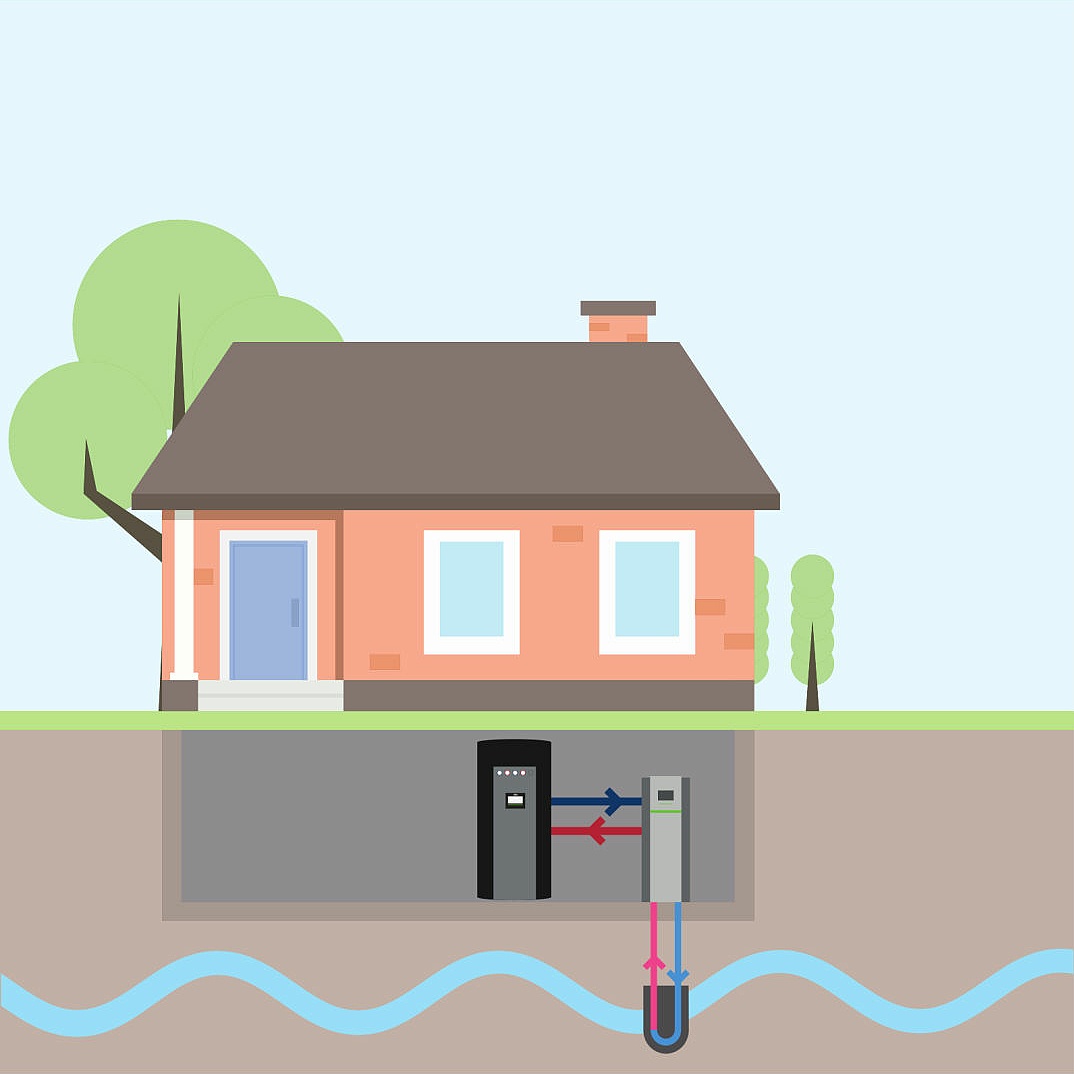
The brine / water heat pumps are also known as ground source heat pumps. As the name suggests, it utilises the constant heat from the ground as an energy source. Geothermal probes, which are installed vertically to a depth of up to 100 metres, are one way of generating heat.
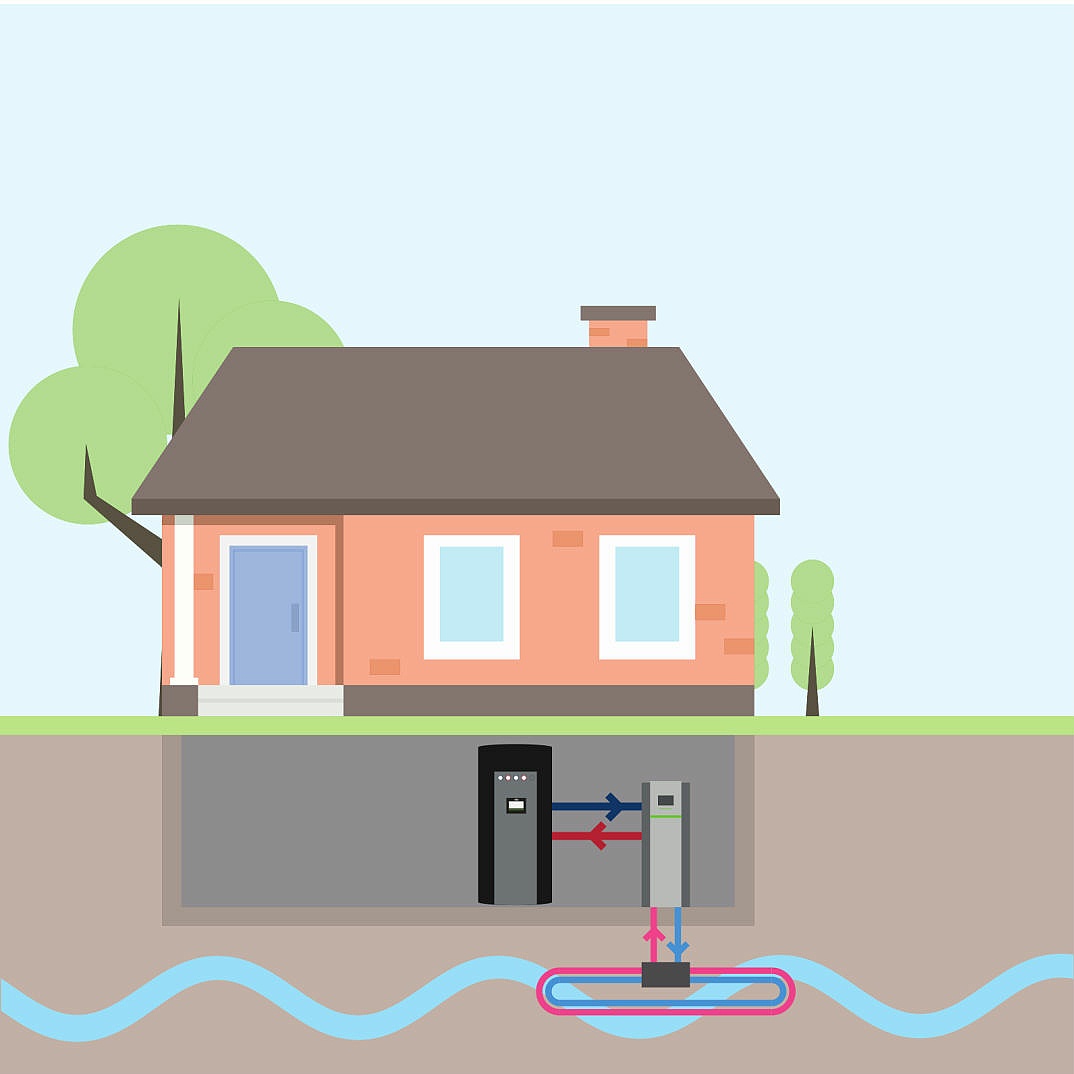
An alternative to this drilling is to lay geothermal collectors over a large area at a depth of around 1.2 to 1.5 metres.
Advantages of brine / water heat pumps:
- Particularly high efficiency
- Reliable heat source independent of outside temperatures
Find out more about the different types of heat pumps here.
What requirements must my house fulfil for a heat pump?
Regardless of whether it's a new build or modernisation, and regardless of the type of heat pump - to ensure that a heat pump heating system works optimally, you should consider the following:
- Good thermal insulation: KfW Efficiency House standards with insulated exterior walls, an insulated roof and triple-glazed windows are ideal. For older buildings, energy refurbishment is recommended before installing a heat pump in order to minimise heat losses.
- Low flow temperatures: The heating system should also provide the desired thermal comfort at low temperatures. Underfloor heating and special heat pump radiators are particularly suitable for this. In old buildings, it may be necessary to replace old radiators with such heat pump radiators.
Which heat pump is right for my house?
The choice of the right heat pump depends largely on the conditions on site, the space available and the necessary authorisations. Depending on the installation conditions, different types of heat pumps can be considered.
New build - small plot

Initial situation: The plot is too small or not suitable for deep boreholes or large-scale underground installations to utilise geothermal energy.
Suitable heat pump: Air-to-water heat pump
Why this choice?
- The heat source air is available everywhere and can be tapped with little effort.
An outdoor heat pump unit can be installed flexibly and space-savingly in the garden.
The indoor version can be conveniently installed in the basement or plant room.
New build - larger property

Initial situation: The plot offers sufficient space and geological conditions for the large-scale installation of geothermal collectors or deep boreholes for pumping groundwater. The garden is free of large plants and the neighbouring area is undeveloped and unsealed.
Suitable heat pumps:
Option 1: brine / water heat pumps
Option 2: Water-to-water heat pump
Why this choice?
- Both types of heat pump utilise the constant heat from the ground or groundwater, which is independent of the outside temperature, and therefore work particularly efficiently.
- The available space and site conditions allow the installation of these powerful systems, which offer low operating costs in the long term.
Old building - replace heating
Initial situation: The existing heating system is to be completely replaced. The heat pump is used as the sole heat generator (monovalent heat pump). What is important here is good insulation of the house and a suitable heat distribution system, for example via low-temperature radiators or panel heating.
Suitable heat pump: air-to-water heat pump
Why this choice?
- The air-to-water heat pump does not require any complex development measures - an advantage for retrofitting.
The air heat pump as an outdoor unit can be installed flexibly and space-savingly in the garden.
As a model for indoor installation, the heat pump can be installed in the basement or plant room where the boiler and oil tank used to be.
Find out more about the use of heat pumps in older buildings here.
Old building - add heating

Initial situation: The existing heating system is to be supplemented with a heat pump to make operation more climate-friendly. The result is a hybrid heating system that combines different heating systems. Ideally, the building is modernised in terms of energy efficiency.
Suitable heat pump: air-to-water heat pump
Option 1: Bivalent-alternative mode of operation
The heat pump covers the heat demand up to a defined outdoor temperature. If the temperature drops below this, the existing heat generator takes over the heating. This means that the existing heating system can be operated at higher flow temperatures. This often plays a role in conjunction with existing radiators.
Option 2: Bivalent-parallel mode of operation
The heat pump takes over the heating load alone up to a certain outside temperature. If the temperature drops further, the second heat generator switches on. In this version, the heat pump takes over a significantly higher proportion of the heat and hot water supply.
Heat pump in apartment block
How does cascading work?
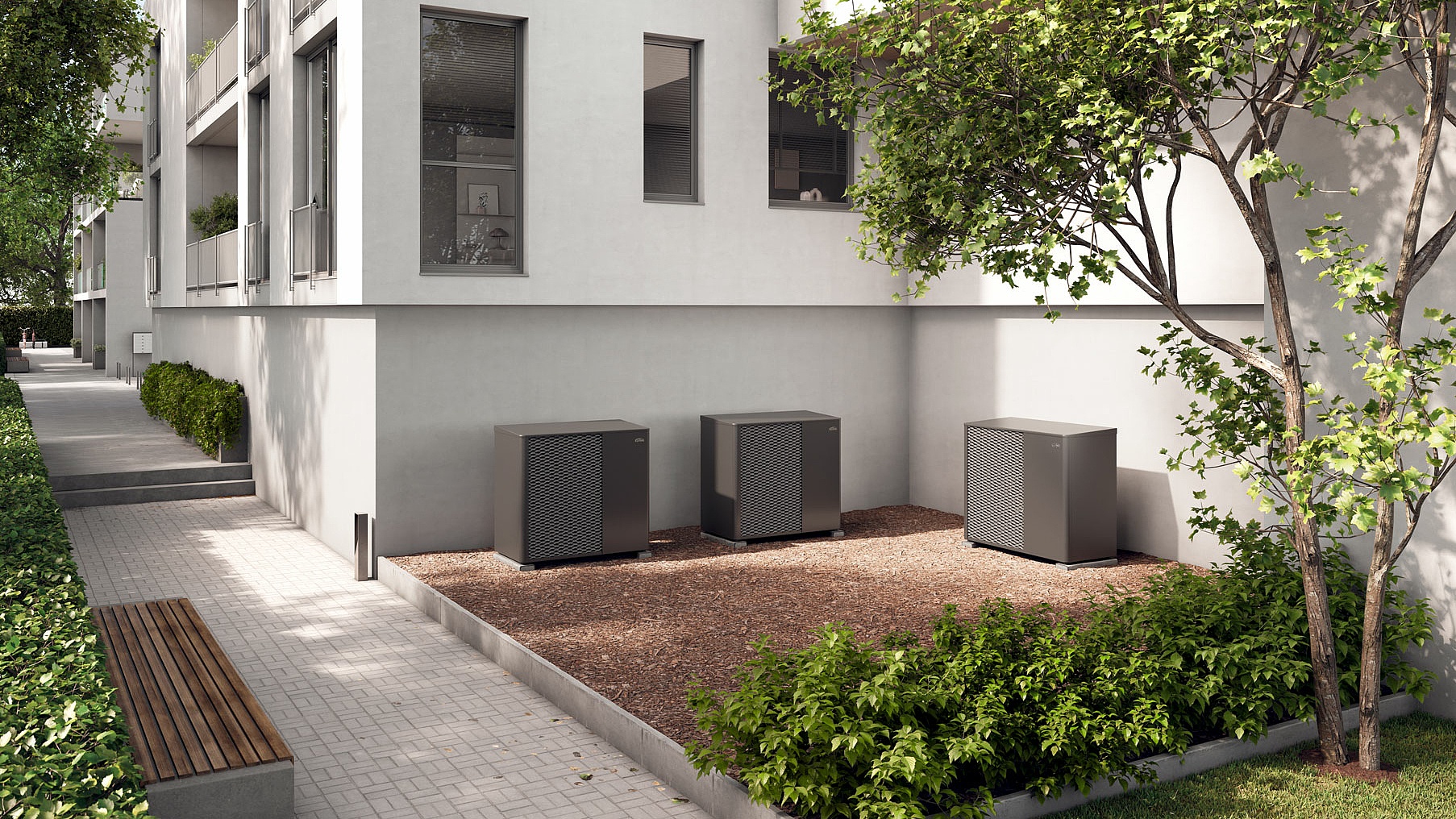
Apartment blocks have a larger living space and therefore a higher heat demand. To cover this efficiently, several heat pumps can be connected together to form a heating system - known as cascading. Individual heat pumps can be flexibly switched on or off depending on the current heat demand in the building. This means that all appliances are in operation at peak load, while only the required number run when demand is lower.
Choose the right heat pump: Heating capacity
Heat pumps are available in various output sizes. The heating capacity of the respective appliance is specified in kilowatts (kW). How much heating capacity a house actually needs or how large the heating requirement is depends primarily on
- the size of the building, i.e. the area to be heated,
- the thermal insulation and thus the question of how great the heat loss to the outside is
- the type and efficiency of heat transfer to the rooms.
Expert advice from an experienced tradesman or energy consultant is recommended in order to determine the appropriate heating capacity and optimise the design of the heat pump.
Tip: Combination with storage solution
To make optimum use of the environmentally friendly heat generated by your heat pump, it should be stored efficiently and brought into the rooms. It is therefore best to combine the heat pump with a suitable hot water storage tank or buffer storage tank. This way, the heat is available exactly when you need it. Underfloor heating or special heat pump radiators also ensure an even and pleasant heat distribution - for a cosy feeling in your home.
By the way: If all components and the control technology are precisely coordinated, you can also save energy and significantly increase comfort. This allows you to get the most out of your heat pump.
Costs associated with the heat pump
The cost of a heat pump varies depending on the type and size of the system. As a rule, the purchase and installation costs are approximately between 20,000 and 40,000 euros, which is slightly higher than for conventional heating systems such as gas or oil heating. However, you benefit from lower operating costs and lower maintenance costs in the long term.
The electricity consumption of the heat pump is an important factor in the height of the operating costs. This in turn depends on the efficiency of the heat pump, which is described by the COP value, among other things: The higher the value, the more efficiently the system works and the less electricity it requires for heat generation. The area to be heated, the heat demand, the insulation of the building and the outside temperatures also have an effect on the heat pump's electricity consumption.
Additional tip: By combining it with a photovoltaic system, you can use your own electricity for the heat pump and thus further reduce electricity costs.
Financing a heat pump
Utilise subsidies
Subsidies for heat pumps, such as grants, low-interest loans or tax benefits, can significantly reduce investment costs. It should be noted that certain efficiency requirements or minimum technical standards usually have to be met. In addition, the funding opportunities also vary from region to region and can change. It is therefore worth obtaining up-to-date information prior to installation.
The attractive subsidy options and conditions within the framework of the BEG (Federal Subsidy for Efficient Buildings) can be found at KfW.
Important: Apply for funding before starting the installation so as not to jeopardise eligibility for funding!
Heat pump maintenance
Little effort - great benefit

- Heat pumps work without combustion. This means that the chimney sweep does not have to visit regularly to check and inspect them, as is mandatory for oil and gas appliances.
- Heat pumps are generally low-maintenance. They often also offer the option of remote maintenance, so you don't have to make a time-consuming on-site appointment with your specialist partner and any problems can often be efficiently rectified remotely.
- Another advantage: heat pumps do not show any gradual loss of performance. The performance of the heat pump remains the same even years later.
FAQ
What does COP mean for heat pumps?
The coefficient of performance of a heat pump is also called COP (coefficient of performance) and is an important indicator of efficiency. The COP value always refers to a defined operating point and describes the ratio of electrical power consumed to heat output delivered. A COP value of 4.96 (A2/W35) for an air/water heat pump means, for example, that at an air temperature of 2°C (=A2) and a flow temperature of 35°C (=W35), 1 kW of electrical energy produces 4.96 kW of heating capacity. In principle, therefore, the higher the COP value, the more efficiently the heat pump works and the less electricity it requires to operate.
Does a heat pump make sense in an old building?
Yes, heat pumps are also a sensible and environmentally friendly heating solution for old buildings. They utilise free energy from the air, water or earth, making you independent of rising oil and gas prices. However, in order for the heat pump to work efficiently in an old building, a few requirements must be met: Good insulation of the roof, façade and windows is important to minimise heat loss. It should also be checked whether the existing radiators can provide the desired level of heating comfort even with the lower temperatures of the heat pump. Replacing the old radiators with special, particularly efficient heat pump radiators may make sense here.
Can I operate a heat pump with radiators?
Heat pumps can also be operated with modern (flat) radiators without any problems. The flow temperature - i.e. the temperature to which the water is heated before it enters the heating circuit - is crucial for efficient operation. Heat pumps work particularly efficiently at low flow temperatures. For this reason, radiators should be used that bring the desired thermal comfort into the rooms at such low temperatures. Older radiators often do not achieve this and should be replaced with modern radiators. Special heat pump radiators, which are optimised to the requirements of the heat pump and thus enable maximum efficiency, are particularly effective.
What needs to be prepared structurally for the installation of a heat pump?
The structural requirements for the installation site differ depending on the type of heat pump. Air-to-water heat pumps are the easiest to install. A stable substrate should be available for outdoor installation. Devices for indoor installation require a room, e.g. in the basement, that has load-bearing capacity and is well ventilated.
Brine / water heat pumps, on the other hand, require geothermal collectors to be laid over a large area or geothermal probes to be installed at depth. This requires either a large, unsealed area (collectors) or a soil expertise (probes). For water-to-water heat pumps, two wells must be drilled to transport the groundwater to the heat pump. As a rule, this access must be authorised.
Due to these structural preparations, brine / water heat pumps are usually more suitable for new buildings or major refurbishments, while air / water heat pumps are also suitable for retrofitting existing buildings.
Do I need a licence for a heat pump?
Whether a permit is required depends on the type of heat pump. Air-to-water heat pumps and brine / water heat pumps with geothermal collectors generally do not require a permit, as no deep drilling into the groundwater is necessary. With air-to-water heat pumps, however, attention should be paid to the distance to the neighbouring property, as the devices can cause noise during operation.
For water-to-water heat pumps, on the other hand, a permit is required as deep drilling is required and groundwater is used. The regulations vary depending on the federal state. It is therefore important to obtain information in advance from the relevant water authority and the geological service.
Can I combine a heat pump with photovoltaics?
A combination of heat pumps and photovoltaic systems is not only easily possible, but also makes sense. Heat pumps require electricity to operate. By combining them with photovoltaic systems, they can be operated with self-generated, green electricity in a way that conserves resources and saves costs. The x-change dynamic heat pumps from KERMI enable the intelligent use of PV electricity to generate heat on demand thanks to the built-in power-to-heat function. The heat generated is stored in a heat storage unit and is then available when needed.
Buy a KERMI heat pump
We attach great importance to the highest quality and flawless installation of our products. That is why we sell KERMI heat pumps exclusively via the three-stage sales channel. This ensures that you not only receive a premium product, but also benefit from the best possible advice, planning and professional installation. Your qualified local specialist partner is your direct contact and ensures the optimal integration of our efficient and sustainable heating solutions into your home.