Cooling with the heat pump
Heat pump in summer. Cooling instead of heating.

If the necessary technical requirements are met, heat pumps can certainly be used for cooling living spaces. Whether air/water, brine/water or water/water heat pumps - unlike classic air conditioning systems, the heat pump cools without any unpleasant draughts via the water pipes of the underfloor or wall heating system. The x-flair heat pump radiator can also cool when used with the special x-flair thermostatic sensor head.
A distinction is made between two operating modes, active cooling and passive cooling. The principle is the same for both cooling variants: instead of extracting heat from the environment and transferring it to the building to be heated, as in heating mode, the excess radiator heat is absorbed in summer and dissipated to the outside.
Active cooling with a heat pump
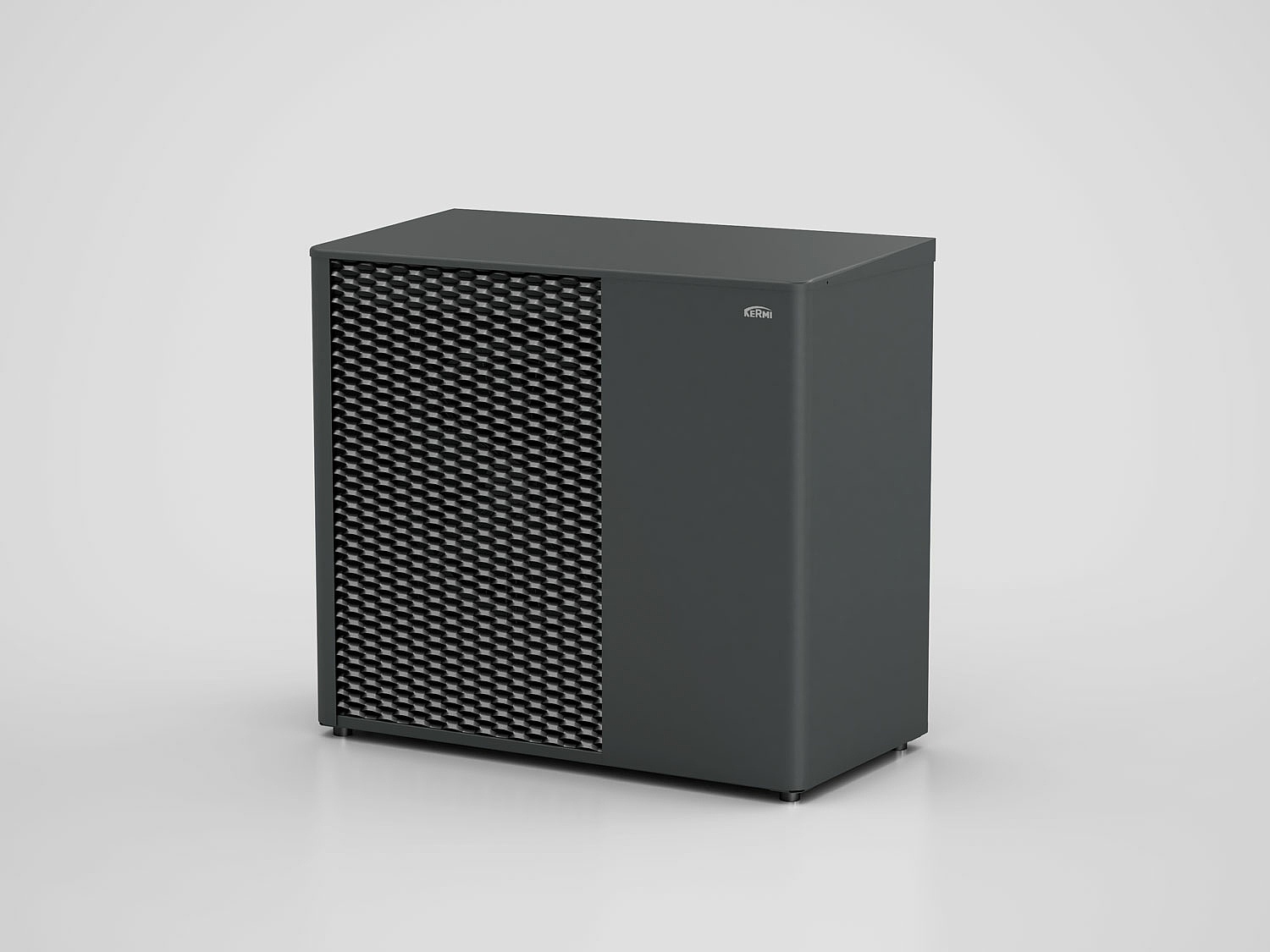
For active cooling, the heat pump must be reversible. This means that it must be possible to reverse the refrigeration cycle.
This is because for active cooling it runs in the opposite direction. During cooling, the water circulating in the respective heating circuits or separate cooling circuits extracts thermal energy from the building and is fed directly to the heat pump.
In the heat pump, the reverse cooling circuit process ensures that the radiator heat is transferred to the outside air and the heat pump remains "active". Underfloor or wall heating is suitable as a cooling surface for active cooling.
Suitable heat pumps:
Passive cooling with a heat pump
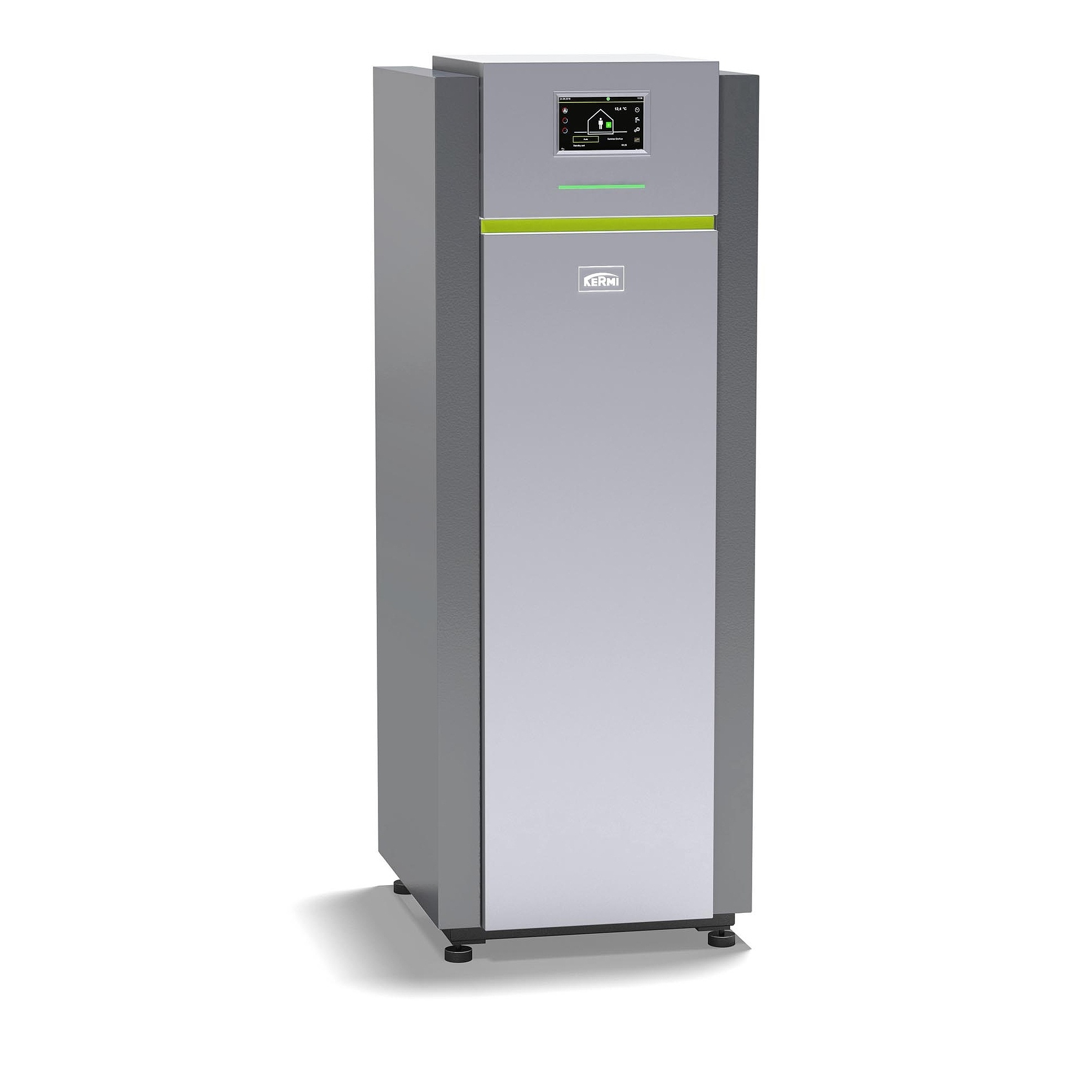
Passive cooling (natural cooling) is based exclusively on the principle of heat transfer. Heat energy is extracted from the building via the respective heating circuits and fed directly to the primary circuit of the heat pump with an additional heat exchanger.
The heat energy is transferred to the ground or groundwater via the primary circuit. During passive cooling, the heat pump is not in operation - it remains switched off "passively". Underfloor heating or wall heating is also suitable as a cooling surface here.
Suitable heat pumps
Differentiation between active and passive cooling
Passive cooling
With passive cooling, the water in the heat distribution system is cooled exclusively through heat exchange with the ground. Water at a temperature of around 18 degrees Celsius flows through the heating and cooling circuits and extracts the heat from the living spaces.
The heat is dissipated via an additional heat exchanger so that the excess heat is channelled into the ground. The heat pump does not work actively. Only the heat source and the heating pump are in operation and ensure circulation and the necessary heat exchange.
Active cooling
With active cooling, the operating principle of the heat pump is reversed. The heat pump absorbs radiator heat on hot days and cools it down via the compressor. The building becomes a "refrigerator", so to speak.
The heat pump works actively. The refrigerant cycle of evaporation, compression and condensation runs in the opposite direction to the heating mode: the original evaporator becomes the condenser and the condenser becomes the evaporator.
Extra tip
If cooling is realised via underfloor or wall heating, the temperature must not fall below the dew point temperature, otherwise moisture could condense on or in the floor and cause damage. Safety & security is provided by special sensors that shut down the cooling output if the temperature falls below the dew point (depending on the temperature and relative humidity).
General requirements
Shading
An important component of a building with cooling is sensible shading of the window areas. For the cooling effect to be noticeable in the building, the solar gains from the sun must be minimised in the case of cooling, otherwise more heat energy is brought into the building through the windows on warm summer days than cooling energy can be provided by the cooling.
Cooling in the room
In order for the cold water supplied by the heat pump to be utilised, a suitable cooling system must be installed in the room. The simplest system is to convert the installed underfloor heating into an underfloor cooling system with the help of suitable room controllers and a dew point monitor. However, the effect of underfloor cooling in the room is highly dependent on the installation distance of the underfloor heating, the nature of the floor (e.g. tiled or wooden floor) and also the type of construction of the building. Depending on these factors, underfloor cooling can only have a limited effect on the room temperature. Furthermore, a "cold floor" can possibly lead to a reduction in comfort. Possible other or additional cooling systems such as ceiling cooling elements or systems with fan coil units in various versions can increase the cooling output in the room many times over in most cases.
Dew point
A very important point in the cooling of a building is the dew point. Depending on the ambient temperature, flow temperature in the cooling system, humidity and surface conditions, undesirable humidity and water can form in buildings when cooling falls below the dew point. This must be avoided at all costs, as undesirable moisture and water formation can cause major damage to the building and the system. When using the cooling function, all pipelines and fittings must be made of corrosion-resistant material. Furthermore, the relevant pipelines and buffer storage/hydraulic separators within the building must be insulated to prevent vapour diffusion.
Depending on the cooling system, either dew point monitoring must be ensured and, if the temperature falls below the dew point before moisture forms, the cooling of the system in question must be deactivated and/or the condensation must be discharged in a controlled manner (e.g. in fan coil units).
Dew point monitor in an underfloor heating and underfloor cooling system
A dew point monitor is recommended directly on the storage tank, downstream of the relevant heating/cooling circuit pump. In addition, a dew point monitor must be installed and connected in each underfloor heating manifold.
Changeover switch from heating to cooling - change/over signal (C/O)
The so-called change/over signal (C/O) ensures that the entire heating/cooling technology in a building knows whether the system is in heating or cooling operation. A higher-level controller / control unit decides whether heating or cooling is required, usually based on the outside temperature; this is normally done by the heat pump. Here, a contact is closed or opened during the changeover switch from heating to cooling. This contact informs the other participants in the system (e.g. the underfloor heating/cooling) that cooling is now taking place.
Planning and designing a cooling system
To ensure that the cooling works, it is recommended that each cooling system is also designed using a cooling load calculation. The general cooling load, the required cooling output of the systems in the room and all other required data must be calculated and planned. Things such as solar gains from solar radiation, internal gains from electrical appliances or people, air exchange through manual or controlled bleeding / venting of the building, etc. must also be included in the calculation.